Educating Sommeliers Worldwide.
By Beverage Trade Network
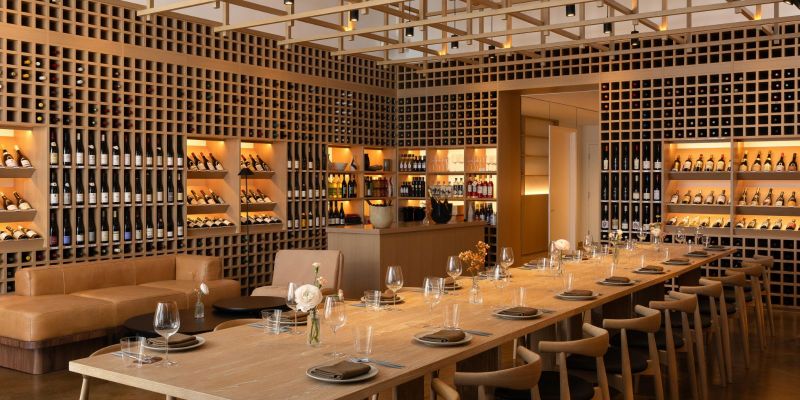
A restaurant wine list may appear to be a curated collection of prestigious labels, trending regions, and personal favorites, but behind it lies a highly strategic and disciplined process. Every bottle must earn its place by meeting a complex set of criteria that goes far beyond taste alone. Wine buyers must consider how a wine fits within the restaurant’s identity, complements the menu, aligns with pricing expectations, and performs in a fast-paced service environment. A wine that impresses in a tasting room may still be rejected if it does not resonate with the restaurant’s clientele or operational needs.
Successful wine programs are built at the intersection of hospitality, practicality, and financial awareness. Sommeliers evaluate whether guests will understand and appreciate a wine, whether staff can confidently recommend it, and whether it can be sold at a fair price while maintaining profitability. They also consider supply consistency, storage limitations, and how easily the wine integrates into the overall dining experience. Ultimately, selecting wines for a restaurant is not just about showcasing quality; it is about creating a cohesive, functional, and engaging experience that enhances both the food and the guest journey.
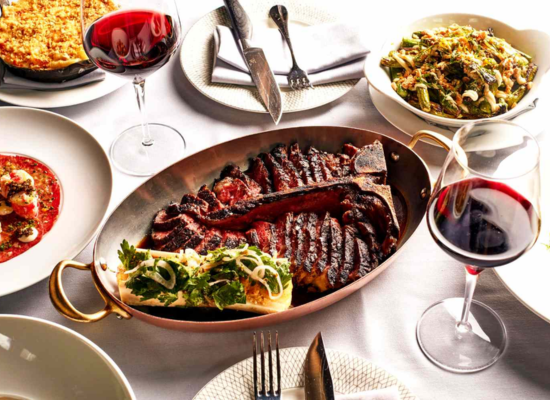
Source: Food & Wine
Before a buyer opens a sample bottle, the restaurant’s identity has already narrowed the field. A neighborhood Italian restaurant, a seafood-focused dining room, a modern steakhouse and a chef-led tasting-menu venue may all purchase excellent wine, but they need different kinds of excellence. Cuisine, average check, service style, storage capacity and guest expectations determine which regions, varieties, vintages and price points deserve space. Some restaurants build lists around a country or cuisine, while others focus on farming practices or emerging regions. What matters is coherence. A premium Napa Cabernet may suit a corporate steakhouse but struggle in a small Mediterranean restaurant where guests favor lighter reds and lower prices. It is being judged against the role the restaurant needs to fill.
The menu is one of the most important buying documents in the building. Sommeliers assess acidity, tannin, alcohol, sweetness, body, texture, and aromatic intensity in relation to the food, then look for wines that support either a signature dish or a broad section of the menu. A highly regarded wine that overwhelms the cooking is less useful than a modestly priced bottle that works naturally across several plates. Versatility becomes especially important when space is limited. A bright, saline white may cover shellfish, vegetables and lighter pasta, while a supple red may suit poultry, pork and mushrooms. Sparkling wine can move from aperitif to fried food, raw seafood and celebrations.
Strong buyers search for gaps instead of adding duplicates. If the list already contains several rich Chardonnay options, the next white may need sharper acidity, a different texture or a more approachable price. The practical question is not merely, “Is this wine good?” It is, “What does this wine allow our menu and service team to do that another bottle does not?”
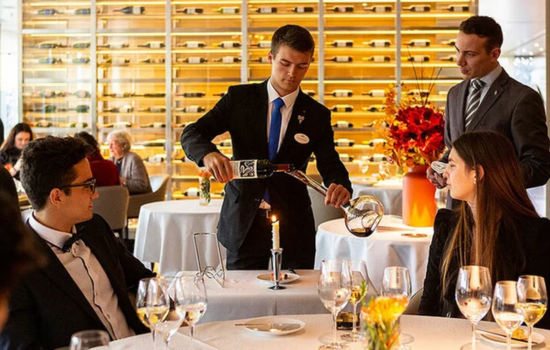
Source: EHL Hospitality Business School
Restaurant wine buying is inseparable from pricing. The buyer begins with the delivered wholesale cost, then considers the likely menu price, expected sales volume, inventory risk, and gross profit. There is no single markup formula used by every restaurant. Many programs price accessible wines differently from rare bottles or prestige selections because a uniform multiplier can make expensive wines impossible to sell and inexpensive wines insufficiently profitable.
By-the-glass calculations are particularly unforgiving. A 750-milliliter bottle yields about five five-ounce pours, but staff tastes, generous pours, spills, flawed bottles, and oxidation all affect the return. A slow-moving wine may lose money if part of each bottle is discarded. Value means more than a low wholesale price. A distinctive bottle listed at $65 may offer better value than an anonymous wine at $48 if it gives the guest a clearer sense of place, quality and occasion. Recent U.S. reporting has described weaker wine volume alongside stronger pressure on value, while white and sparkling styles have gained momentum in parts of the on-premise channel. Restaurants can still invest in expensive or unusual bottles, but those choices must be balanced by wines that sell consistently.
The by-the-glass list is often the most active part of a restaurant wine program. It serves guests who do not want a full bottle, introduces unfamiliar grapes and gives the sommelier a flexible pairing tool. Wines selected for this section need immediate appeal, dependable supply, food versatility and a price that supports both guest value and restaurant margin.
The bottle list can take more risks through small-production wines, older vintages, unusual appellations and special-occasion selections. These create depth but may sell slowly, increasing the importance of storage, cash flow and staff knowledge.
Preservation technology has widened the possibilities for premium pours. Coravin markets systems for restaurants and wine bars that allow operators to pour wine while preserving the remainder of the bottle, helping some programs offer higher-value or slower-moving wines with less waste. This does not replace sound purchasing, but it can change which wines are commercially realistic by the glass.
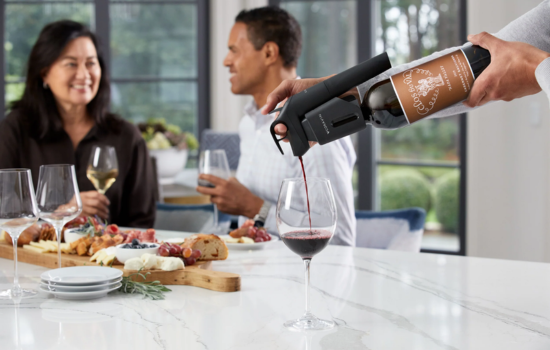
Source: Coravin
In the United States, availability is part of the product. The state-regulated three-tier structure generally places producers or importers in the first tier, wholesalers in the second and restaurants, bars and retailers in the third, although rules vary by state. A wine that performs well in a tasting still needs a licensed route to the restaurant, manageable ordering terms and enough inventory to support the placement. Large distributor networks such as Southern Glazer’s can provide broad market reach, while companies such as Winebow and regional specialists give buyers access to more focused portfolios. Southern Glazer’s says it operates in 44 U.S. states, the District of Columbia, Canada and the U.S. Virgin Islands, illustrating the scale available to some suppliers. Scale, however, does not guarantee attention. A responsive representative from a smaller house may be more valuable to an independent restaurant than access to an enormous book. Buyers want to know whether a wine is in stock, delivered regularly and available with manageable case minimums. SevenFifty, now connected with Provi, allows licensed buyers to search distributor portfolios, review local availability and order through one marketplace. Even with better technology, dependable follow-through remains crucial when an order is short or a vintage changes.
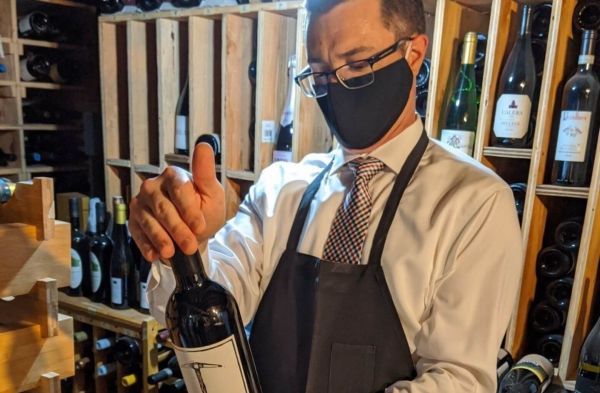
Once a wine passes the initial selection criteria, its success depends on how well it performs in service and on the dining-room floor. Practical considerations such as bottle shape, label clarity, and closure reliability influence how efficiently staff can store, present, and serve the wine. A confusing label or hidden vintage can slow service, while awkward packaging can create logistical challenges in tight storage spaces. Equally important is how easily the wine can be communicated to guests. Staff must be able to describe the wine clearly and confidently, connecting its origin, flavor profile, and pairing potential in a way that feels natural. Wines that come with concise training materials, clear storytelling, and consistent supply tend to perform better because they empower the team to sell them effectively.
Ultimately, the final test happens during live service. Sommeliers monitor sales trends, guest feedback, and reorder frequency to determine whether a wine deserves to remain on the list. Even a high-quality wine may fail if it is difficult to pronounce, poorly positioned in price, or lacks staff engagement. The most successful selections are those that resonate throughout the restaurant, support the menu, engage the team, and deliver a satisfying experience for the guest.

Source: Star Wine List
The wines that succeed in top restaurants are not the most expensive, the most famous, or the most critically acclaimed. They are the wines that solve multiple needs at once: they complement the food, fit the restaurant’s identity, meet guest expectations, support healthy margins, arrive consistently, and give the service team a clear reason to recommend them. For producers seeking placements in the American on-premise market, understanding this decision-making process is essential. Quality opens the conversation, but commercial fit, distribution, staff engagement, and guest response determine whether a wine earns a permanent place on the list. This is also why evaluations such as the Sommelier Choice Awards matter. By considering food compatibility, value, typicity, presentation, and quality, the competition reflects the same practical standards used by professional wine buyers. The strongest restaurant wines do more than impress in the glass; they perform reliably across the dining experience and encourage guests to order again.
Header image source: Star Wine List
Also Read:
Footfall Is Down in U.S. Restaurants. Here’s What That Really Means for the Industry
Restaurants Need More Moments, Not Just Menus
Mastering the Art of Wine Flights: A Guide to Curating Engaging Tasting Experiences