Educating Sommeliers Worldwide.
By Beverage Trade Network
Recently, I visited Electric Sheep Restaurant in Bangkok, and it left me thinking long after the meal had ended.
The food was excellent. The drinks felt thoughtful. Service was warm, effortless, and genuinely welcoming. But what stayed with me most was not a particular dish or cocktail. It was something far more important — the experience itself and how intentionally every part of that experience had been designed.
As someone who spends much of his time speaking with restaurant operators, sommeliers, bartenders, beverage directors, and hospitality leaders around the world, I often think about what truly differentiates great restaurants today. Good food is expected. Strong drinks programs are increasingly standard. Service, at least at quality venues, is assumed to be professional. Yet what increasingly separates memorable venues from forgettable ones is something less tangible — the ability to create moments guests remember and talk about long after they leave.
Electric Sheep understood this exceptionally well.
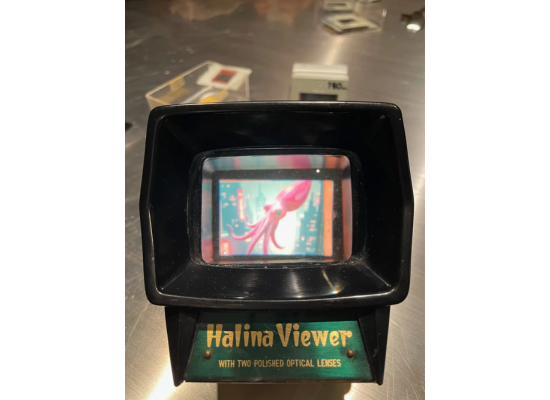
From the moment we sat down, it became clear that this was not simply another restaurant experience. Instead of only relying on beautifully written menu descriptions, menu items and drinks were introduced through a Halina Viewer (commonly known as the Halina Slide Viewer). It is a vintage, handheld or tabletop device used to manually view and magnify 35mm photographic film slides.
It sounds like a small touch.
But somehow, it changed the entire energy at the table.
My children became curious immediately. Instead of rushing to decide what to order, we started exploring. We passed the viewer around, discussed dishes, laughed, and became engaged in the experience together. Ordering no longer felt transactional. It felt interactive.
At first glance, it may seem like a playful gimmick. But I actually think there is something much bigger happening here — something hospitality operators should pay far more attention to.
We often hear discussions around menu engineering, labour costs, beverage profitability, pricing psychology, and operational efficiency. All important topics. But perhaps one of the biggest competitive advantages today lies in designing moments that guests will remember tomorrow.
Call it gamification.
Call it experience design.
Call it emotional hospitality.
Whatever term we choose, the principle remains the same: people increasingly want experiences they talk about later.
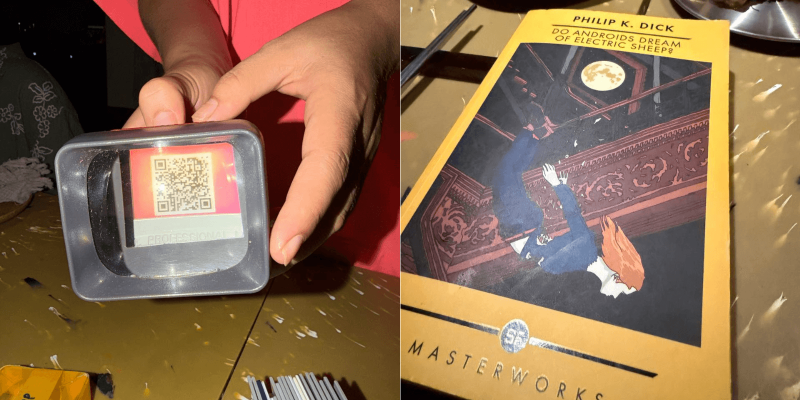
The restaurant had also brought us a book that inspired them to create that name and concept when we asked.
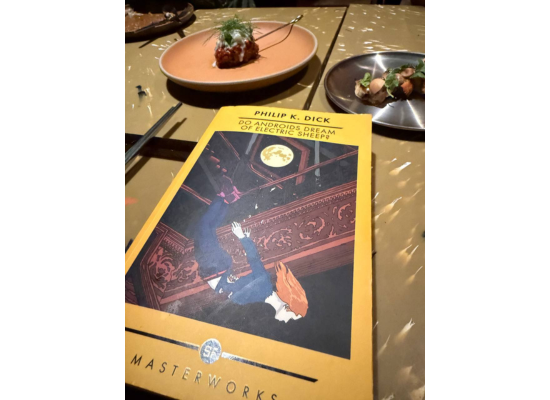
That is when I realised something important. The restaurant was no longer simply serving us dinner.
It was creating participation.
Hospitality has changed. Guests increasingly want to engage, discover, and feel connected to experiences rather than simply consume them.
During conversations with staff, we learned that Electric Sheep had been founded by two Michelin-starred chefs who had left established careers to build something of their own. Naturally, my elder child became fascinated and started asking questions about becoming a chef.
The easy thing for staff would have been to smile politely and move on.
Instead, they leaned into curiosity.
“Would your kids like to see the kitchen?”
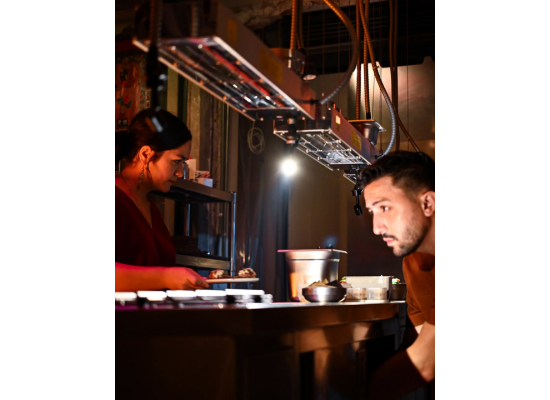
Minutes later, my children were inside, meeting the chef, asking questions, taking photographs, and getting a behind-the-scenes look at how everything worked.
For a child, that feels magical.
For a parent, that becomes unforgettable.
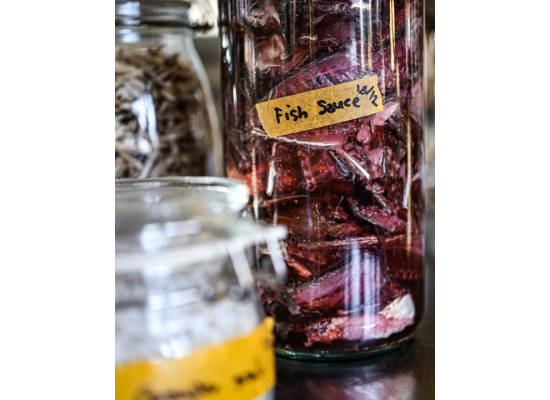
Then we discovered yet another layer to the story. Inside the restaurant was a lab where herbs and vegetables used in dishes were grown. Suddenly, provenance was not simply language printed on a menu. It became something visible, tangible, and real.
What impressed me even more, however, was the emotional intelligence shown by the service team.
Like many families dining with children, we found ourselves debating dessert. Should we have dessert at the restaurant or walk next door for ice cream? The kids, unsurprisingly, were leaning toward ice cream. Meanwhile, we adults were quietly discussing how badly we wanted to try the tiramisu.
Somehow, the team picked up on the conversation.
What happened next was one of the smartest hospitality moments I have experienced in years.
There was no awkward upsell. No interruption. No attempt to persuade us to stay.
Instead, they simply surprised us with a complimentary tiramisu.
What an ending to the evening.
Now, from a purely operational perspective, some might say the restaurant gave away dessert revenue. But I would argue they gained something significantly more valuable — emotional connection. Also, ROI came instantly as I gave a good Tip.
And here I am writing about them. Because my children still remember it.
Because thoughtful moments like that stay with people long after the bill is paid.
And this is something I think the hospitality industry sometimes underestimates. Restaurants are emotional businesses.
Guests rarely remember every dish in detail. But they remember how a place made them feel. They remember generosity. They remember warmth. They remember when someone paid attention.
Again, this was not just dining.
It was immersion.
And this entire experience reinforced something I believe our industry should think more seriously about.
The future of restaurants will not belong only to those with the best food or beverage programs. Increasingly, it will belong to those who design memorable guest journeys.
Sometimes that happens through playful interaction.
Sometimes through storytelling.
Sometimes through staff empowered to genuinely listen.
Sometimes through unexpected generosity.
And often, it is the combination of all those things.
At Beverage Trade Network, and through our conversations at Sommelier Business and Bartender Business, we spend enormous time discussing beverage trends, service standards, profitability, and guest expectations. Yet perhaps one of the most under-discussed opportunities in hospitality today is this:
Moments guests photograph.
Moments children talk about the next morning.
Moments that surprise people.
Moments that turn customers into storytellers.
Because in a world full of good restaurants, memorable hospitality wins.
Food may get guests through the door.
But experience is what brings them back.
By Sid Patel, CEO, Beverage Trade Network | Publisher, Sommelier Business & Bartender Business
Also Read:
Footfall Is Down in U.S. Restaurants. Here’s What That Really Means for the Industry
How Top Sommeliers Boost Beverage Sales And Enhance Guest Experiences
How AI & Data Analytics Are Changing Wine Menus and Sales Forecasting