Educating Sommeliers Worldwide.
By Beverage Trade Network
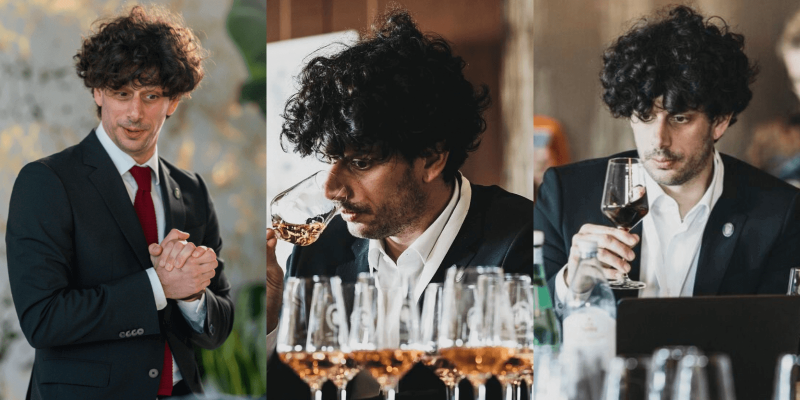
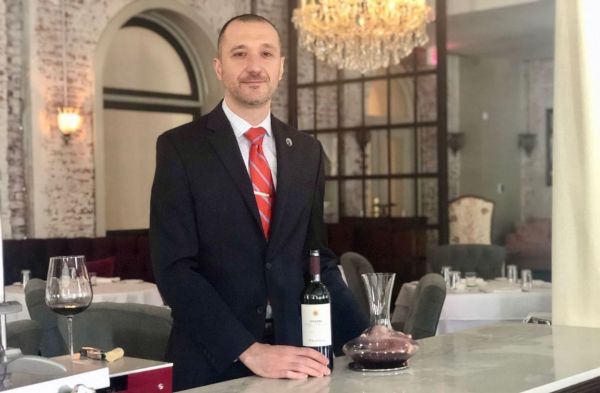
Konstantinos Kosmopoulos brings the perspective of a modern sommelier whose career has spanned destination restaurants, luxury hospitality, and international wine markets. Trained through the Court of Master Sommeliers and certified in sake, he has built his reputation not only through service but through wine program leadership, openings, pairing strategy, and commercial consultancy. His journey from Mykonos and London to Dubai gives him a sharp understanding of how wine performs in real restaurants, where quality must meet guest confidence, food compatibility, pricing, and profitability. This makes his viewpoint especially relevant in today’s on-premise wine landscape, where sommeliers are expected to balance storytelling, service, and business. In this conversation, he shares how sommeliers can identify restaurant-ready wines, support lesser-known regions such as Greece, and help producers connect more meaningfully with U.S. buyers.
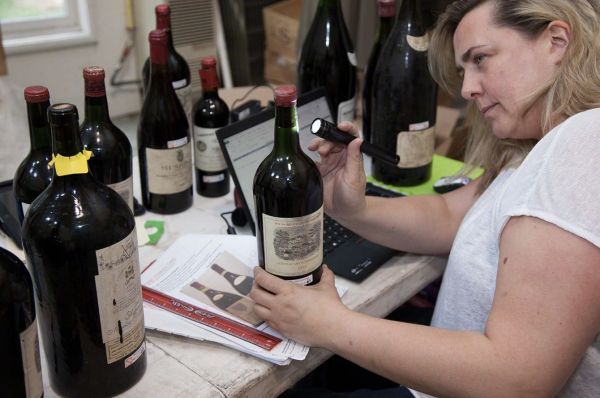
Absolutely! It's been a great ride so far! Becoming a Sommelier came to me quite late in my restaurant journey, as I thought it would give me a better quality of life than being a busser or a waiter. It did, to a certain extent, but little did I know that it would require of me many more sacrifices and effort to move from one level to the next. Officially, my Somm journey started in one of the most interesting destinations of the Mediterranean, Mykonos, and from there the doors opened to plenty of international exposure. My journey has taken me to amazing places across Europe and allowed me to work with people, experience different work cultures, and be influenced by them. Currently, I am in the United States, working as Head Sommelier at Carriage House in Palm Beach, one of the most private members' clubs in the US.

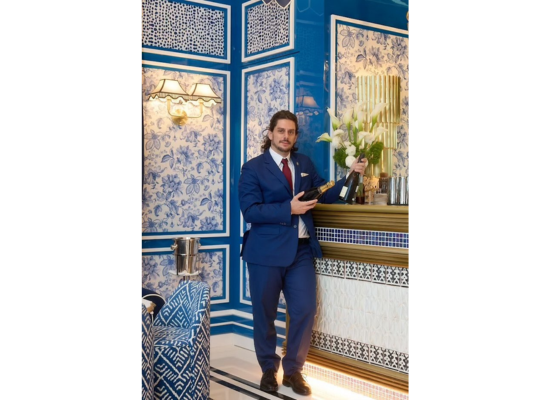
Source: Town & Country
Working in different environments like the aforementioned has not given me any magical ability to read my crystal ball and decide on a heartbeat if the wine list is good or not. Personally, I think two distinct elements separate an average wine list from a great one. Firstly, the way the list brings to the table the offering of the country’s production, if there’s any, and the diversity of the imported wines for the discussed market. Secondly, the effort of the Sommelier who’s bringing the menu together, in making it engaging, deep, and diverse.
That’s an easy one. The perceived sense of value is totally subjective to the establishment where the wine is enjoyed. That sense is different in a restaurant where a Michelin-starred or celebrity Chef is designing the culinary offering and in a wine bar setup where the wine is the epicentre, not the food or the service received. That being said, value is defined not only by the price on the wine list, but also by the means used to amplify the received pleasure: stemware, food, ambience, etc.
I feel one of the most frequent mistakes is the habit of allowing the vendors to make the selection for the restaurant based on what they want to sell rather than what the restaurant should be listing based on the concept and other qualitative factors. One more thing is that many restaurants get their pricing strategies wrong, either by making their wine lists discouragingly expensive or by leaving money on the table in some cases.
There is no golden ratio to this, in my opinion. It all depends on the concept of the establishment and the concept of the wine list. A classic French restaurant should be focusing more on the benchmark producers of the wine regions represented in their wine offering. A bistro that experiments more in its culinary offering should be adventurous in its wine list too.
Greece is no longer in the “Others” sections on many wine lists around the world, and our producers ought to make the most of the momentum gained every year. I think that making use of all the available channels is a must moving forward in the form of publications, wine competitions, trade tastings and the good old producer tours.
Today’s drinkers are looking more at factors like drinkability rather than typicity. A wine that is pleasant to the palate and nose of the consumer has a good chance of being reordered in a restaurant or retail setting. Therefore, typicity is indeed an important virtue, but this is more a factor for the sommeliers rather than a guest who’s ordering to accompany their meal or their moment.
Despite the commercial aspect that is growing, the service of wine will always maintain a ritualistic feel. From the way the wine is brought and presented to the table all the way until the last drop is poured. People go to restaurants to be entertained; otherwise, they would enjoy meals at their homes. Every pass of the Sommelier pouring wines for them should add a little bit of lore and history for the selected bottle so the patrons are receiving an experience rather than just a business transaction with the Sommelier.
That’s probably associated with the latter part of the question. A wine of high quality is a memorable one. The flavour will linger on the palate longer as the quality level rises; that’s what we usually measure with the term aftertaste. There have been examples of wines that have struck me so much in my journey that I can still bring their taste back when reflecting on them.
Patrons may be fascinated by different aspects of packaging. Some labels are truly engaging for guests and sommeliers too. Take Sine Qua Non for example. The format has two different interpretations. There are the patrons who are a bit more savvy and opt for larger bottles, which are aged, as the wines show a much better ageing process in a large bottle. On the other hand, there are those who take a bigger bottle for impression purposes. As for the closure, the vast majority of guests consider wines without a cork to be of inferior quality, which is absolutely not true.
Restaurateurs, even the most romantic ones, are businessmen, and numbers are easier for them to understand. Therefore, since the wine list is part of that small ecosystem which is designed to bring profit, it is inevitable to approach it as something other than a business tool, in my perspective. Every wine program-related decision made from my end as a consultant is based on quantifiable clues, demographics of the project, and drinking tendencies of the clientele.
Organic and biodynamic wines have had a special place in my heart since I was introduced to them. I strongly believe that these styles are somewhat the answer to the alcohol consumption decline, along with low ABV wines. The world is becoming more health-conscious year by year and pays closer attention to what they eat and drink. Hence, the rise in public awareness of wines that are made with much more care as an agricultural product.
Also Read:
10 Lessons from Ryan Hoffman on Empathy, Wine and Restaurant Operations
How to Build a Profitable, Guest-Focused Restaurant and Beverage Program
How To Build A Wine Discovery Ladder That Encourages Guests To Explore