Educating Sommeliers Worldwide.
By Beverage Trade Network
A successful beverage program requires much more than an impressive wine list or creative cocktail menu. Restaurants must understand their costs, control inventory, train their teams and make recommendations that increase sales without making guests feel pressured.
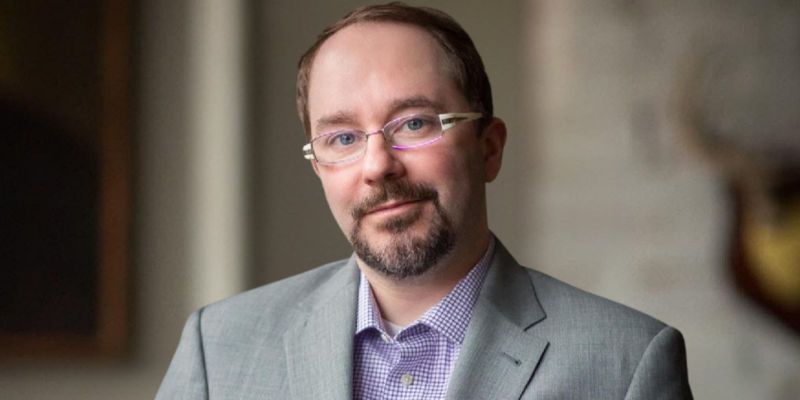
In this interview, Sid Patel, CEO of Beverage Trade Network, speaks with hospitality leader Jesse Hiney about the commercial and operational foundations of a successful beverage program. Drawing on more than two decades of restaurant experience, Hiney explains how operators can evaluate their beverage offering, improve average check values, secure the second drink, and use water, wine, cocktails, coffee and dessert to create additional revenue opportunities.
Now serving as Regional Director of Operations for Roka Akor Chicagoland, Hiney also discusses the importance of keeping beverage menus approachable, building employee confidence, establishing clear operating procedures and prioritising repeat business over a single expensive sale. His central message is simple: long-term beverage profitability is achieved when sound business systems and genuine hospitality work together.
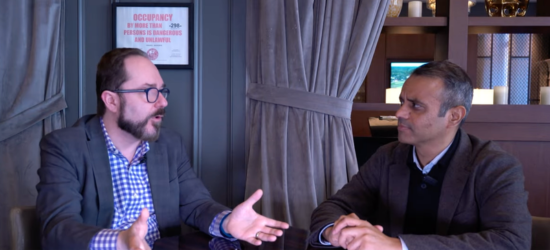
Jesse Hiney (left) and Sid Patel (right)
Jesse Hiney: Absolutely. We’re here at Roanoke Restaurant. This is the flagship restaurant in the Roanoke Hospitality group. All of our restaurants are located in hotels, some in the Loop and some along the Magnificent Mile.
We’re in the process of doing a lot of exciting things, opening new restaurants and changing concepts, so it’s a really exciting time.
There are a lot of different themes for the restaurants. We have Mexican Radio and La Bella, so that’s Mexican food and Italian food. We have Roanoke, which is American cuisine. Then Grill on 21 is over in The LaSalle Hotel, and that’s a fine-dining steakhouse. It’s a really nice restaurant.
We’re mostly in the Loop of Chicago, which is a unique environment because it is the financial district of Chicago. The time and the days during which we’re busy are a little different from those of many traditional restaurants.
Most traditional restaurants are extremely busy on the weekends, particularly Friday and Saturday nights. We do most of our business during the week. On the weekends, we see a lot of the theatre crowd, which is exciting because we have a lot of theatres and the Lyric Opera nearby.
Happy hour is very strong. All the stockbrokers, when they get out of work, want to come to Roanoke and enjoy some cheese curds and an Old Fashioned, or perhaps a glass of wine or a beer. It’s an exciting area to be in.
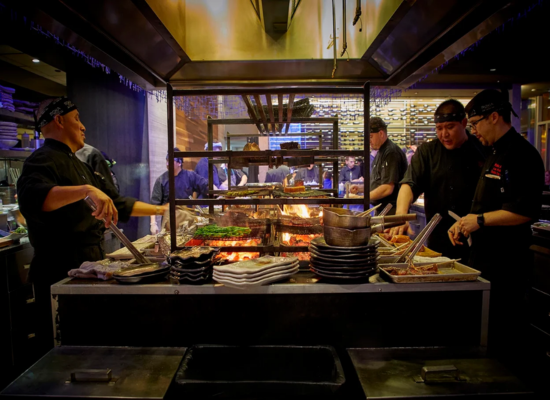
Roka Akor Chicagoland
Jesse Hiney: I’m a hospitality lifer. I’ve been in the business my whole life. My first job in the restaurant business was when I was 18 years old.
I worked my way from North Carolina to Washington, D.C., and then to Chicago. I worked for 12 years in Washington, D.C., for restaurant groups such as Knightsbridge Restaurant Group, Passion Food Hospitality, out of New York City, and BLT Restaurant Group, out of New York City.
I moved here and worked again for BLT Restaurant Group, as well as Truluck’s. I landed here at Roanoke Hospitality, and I’m having a really great time with these guys.
Jesse Hiney: What systems are in place? That’s really number one.
I think that if you have a passion for beverages, delicious cocktails, and a great wine list, that’s really important. But if you don’t have a way of monitoring your bartenders, taking inventory properly, or calculating the actual costs, you’re not going to make a profit.
You might say, “Maybe that cocktail should be $18,” but you didn’t realise that you were using a Scotch that costs you $18 for a pour. You’re not going to end up making a profit. Systems are the first and most important thing you need to have.
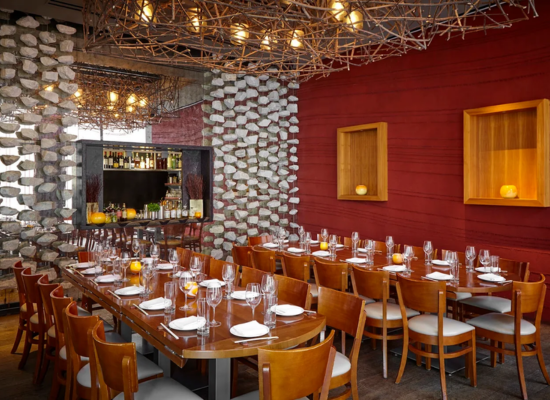
Roka Akor Chicagoland
The second most important thing is: who is hiring, and how are you hiring? What standards are you looking for when you hire someone?
Your team has to have integrity and honesty, and it has to have knowledge. You can’t just hire the best bartender who has ever made a cocktail for you. You have to hire people you can trust. You have to hire people who want to follow through with your ideas.
If they don’t have buy-in, you’re not going to be successful in getting those systems into place. Building the team and hiring would be number two.
The third most important thing—and I think a lot of operators miss this—is to keep it simple.
The more complex you make it, the more difficult it will be for people to enjoy the product you have to offer. It’s nice to have one seven-ingredient cocktail or to use molecular mixology here or there. You can use dry ice or any of these new, innovative ways of making a cocktail. But at the end of the day, a three-ingredient cocktail is what most people are looking for.
Many people come to Chicago from smaller cities in the United States where they aren’t exposed to the things we’re exposed to in big cities.
I’ve made the same mistake during my career. When I put together my first wine list, it had so many esoteric wines on it that only I knew what they were and where they came from. I think I put a Châteauneuf-du-Pape on a wine list in 2013, and I’m pretty sure it’s still there because nobody drinks it.
It’s delicious juice, but people don’t drink it. You need to make sure you have approachable wines. You need to have a Cabernet, a Merlot, a Chardonnay and a Sauvignon Blanc.
It’s great to have a Viognier or any number of esoteric wines on your list, but you have to keep it simple so guests understand what they’re looking for.
There’s a reason the Espresso Martini and the Old Fashioned have been among the most popular cocktails over the last 20 years. Everyone is doing them, everyone understands them and guests don’t walk into the bar and have to figure them out.
Nobody wants to figure it out when they go out to dinner. It’s hospitality. We’re there for them. The third thing I would say is: keep it simple.
Jesse Hiney: What comes to mind is: where are they right now?
Look at the check average. Look at the average cost. Look at the most frequently sold item on the cocktail menu and wine list, and try to determine why people are gravitating towards those particular items.
Are they gravitating towards them because they’re the items they know? Are they gravitating towards them because it’s the lowest-priced wine by the glass, for example?
It depends on the neighbourhood you’re in, and it depends on your clientele. You have to look at many different factors to figure out where you can go.
If somebody said to me, “I want you to increase it by two times,” I would laugh at them and say, “Okay, let’s start with 2%. Let’s start with four dollars. Let’s start by increasing it incrementally.”
It’s very easy to increase the check average with that second cocktail.
The most important piece we didn’t discuss in the first round is training. We can train anyone to sell more simply by providing knowledge. Knowledge is the most important piece, and I bring that to every restaurant I join.
I have a passion not only for food but also for wine and cocktails. I have a passion for the whole business, including the business side itself, so that makes it easy for me.
For example, I often enter a restaurant and know that they sell bottled water, but it isn’t appearing on the tables. If I’m ordering the beverages, including non-alcoholic beverages, and I’m never ordering bottled water, I ask myself, “Well, that’s the easiest piece of the puzzle right there.”
They’re already coming for food. You know people are going to drink water. Let’s not even talk about cocktails yet. Let’s talk about water.
I remember a restaurant where they weren’t selling any water. They were selling perhaps one or two cases a month. After two or three months of talking about it, they were selling ten cases every two weeks.
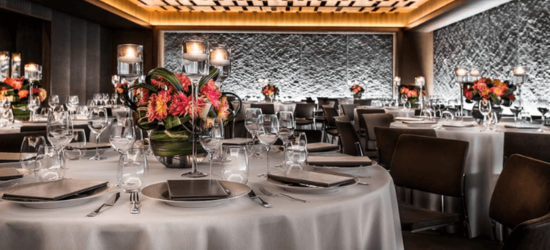
Image: Le Bernardin
Jesse Hiney: The language I have my staff use at every restaurant is very specific.
It’s extremely important that you always offer the free option first: “Would you like ice water, or would you like bottled water?”
That leaves it up to the guest. If they choose ice water, great. The conversation is over, and we move on to the cocktail or whatever comes next.
If they say bottled water, you ask, “Still or sparkling?” Again, it’s over.
We don’t want to pressure anyone in the hospitality business. We’re here to provide, curate and take care of you.
But being in a hotel, you have a lot of international guests. They may not trust the water they have at home, so not offering bottled water can also be a disservice to the guest.
Jesse Hiney: For sure.
I always tell my staff that it’s important to start talking about dessert and coffee before dinner has concluded.
Sometimes it’s a nice idea, when you’re seating a guest, to teach your host to say, “By the way, you have to save room for that chocolate ganache cake. It’s amazing.”
That will stick in the guest’s mind when the subject comes back around.
In the Loop, because it is the business district, people often have to be in and out, especially at lunchtime. You have to prepare them for that ahead of time.
When guests are approximately three-quarters of the way through their entrées, you can ask, “Would you like me to start preparing a cappuccino or an espresso for you? Are you saving room for this dessert? I can have the kitchen start preparing that now.”
You need to be ahead of it. Before they have the chance to think, “I need the check,” you inform them about what you have.
If they want it, they’ll choose it then, and it will be ready in a timely fashion.
I also think it’s important to always have the check ready for them. Around the time the entrée has been served, I instruct my staff to print the check so that whenever the guests need it, you have it ready.
As long as you’re anticipating the needs of your guests and you know all the things you can offer them, you’re armed with that knowledge. Nine times out of ten, you’re going to get the sale.
Jesse Hiney: That’s definitely training. It’s also hiring.
This is a complex question because it also deals with managers and culture. It goes all the way to the top of the culture.
When managers know what we’re going to do and how we’re going to do it, we disseminate that down to the staff. We then hold them accountable on a daily basis. When we do that consistently over a short or long period, that’s when it happens.
You have to have the rules and systems in place. Employees need to know what you expect from them and what will happen if those expectations are not met.
For example, if you say, “From now on, we aren’t going to clear the table until everyone has finished,” and the staff continues doing it, you have to deal with that. That’s a discipline problem. Otherwise, it’s a management problem.
This is a really big deal in a busy environment. Someone may take away the plate of a guest who has finished while another person at the table is still eating.
I tell this story to my staff: imagine you’re out with your mother, father, brother, and sister. Your mother is talking because she loves to talk during dinner with the family.
Everyone else finishes eating, and the waiter or busser comes by and clears all the plates except your mother’s.
How does your mother feel? She feels as though she has to rush. She feels as though she can’t finish her food. We have now turned what was a nice experience for her into an uncomfortable experience.
If you train your staff and explain it in a way they can understand and feel, the training happens much faster.
Jesse Hiney: Two things come to mind. The first is getting that second drink.
In a restaurant, we go over the same things and then come back around and go over them again and again.
I asked my staff at a recent shift meeting, “When do you start asking whether the guest wants that second drink?”
Most of them knew because we had been through it before. When guests have approximately one-quarter of their drink remaining, that’s the time to ask, “Would you like another cocktail?”
Additionally, when the entrées are about to arrive, you already know what the guests are having and what will pair well with it. Suggest, “Would you like a Cabernet this evening with your steak?”
Nine times out of ten, especially if they don’t know wine or don’t know what they want next, they’ll go with what you suggest because you’re the expert in that situation.
I tell my staff that they have to suggest confidently. Don’t force and don’t push, but confidently suggest that the guest try something.
If you’re passionate and knowledgeable about it, you’re going to be all the way there every time.
I was a server for a long time, and I was pretty good at it because I knew my products.
If you said you wanted a gin Martini, I might say, “Would you like Old Raj? Would you like Bombay Sapphire? I really like Monkey 47; it’s very complex, with 47 different botanicals.”
You show what you know.
I always like to sandwich an expensive item with a medium-priced item and then a lower-priced item in an effort to sell the medium-priced item.
You also have to read the consumer. If their eyebrows rise at the high-priced option, you immediately move to something lower or medium-priced.
It’s like menu engineering. Often, you put a very expensive item on the menu partly to sell the second-most-expensive item.
Jesse Hiney: For sure. You have to know your customer and understand the trends.
If you’re talking about someone younger, perhaps a high-end tequila is the direction you should take.
For example, we have a very special tequila that I purchased. One reason I purchased it was because it’s a really cool bottle. It’s an extra añejo, and when I saw the bottle, I thought, “We have to do some kind of social media activation with this because people are going to ask what it is.”
I created a promotion where, if you wanted to taste this very expensive tequila, I would give it to you for around $10 [exact promotion wording unclear]. In exchange, you had to post about it and tag us on social media.
The guest gets an experience, that experience is shared with the world—or part of the world—we get marketing from it, and it pays for the beverage.
You definitely have to know your customer. The older I get, the less in touch I am with younger people.
Jesse Hiney: I really think much of it is personality, and that personality comes from confidence.
If you know your product, you’re more confident. One of my jobs as a restaurant manager and as a human being is to build people’s confidence because everyone performs better when they’re more confident about what they’re doing.
People may not even try if they don’t know what they should be doing.
The confident sommelier will definitely sell more. It has to be confidence with a hint of apathy: “I’m here to provide you with the best possible experience, but if you don’t want it, that’s okay with me.”
You can order the Rombauer Chardonnay if you’d like. I would suggest this Côte de Beaune, and this is why.
You give guests the information. If they don’t want it, great. Give them the tools and let them taste the product.
If you’re confident in what you’re saying and you’re genuine—if you mean what you’re saying—you can support it with the product.
You don’t want to make a big sale today and then never have the guest return.
Sometimes it’s better to sell a $95 bottle of wine to a guest who will return and order the $150 bottle you tried to sell them the first time.
Jesse Hiney: In terms of metrics, not in this establishment. However, philosophically, that is our goal every time. Our goal is to get someone to come back.
I had a shift meeting the other day. When I first started working here, a server wouldn’t say, “We’ll see you next time,” or, “Next time you come, you should try the lamb hummus,” because the server thought, “It’s a hotel. They’re transient. They aren’t coming back.”
But then he started to see that people were coming back because this is the financial district. We’re almost like a cafeteria for people working in the Loop.
Additionally, people often come to Chicago for conventions. Chicago is an increasingly popular place. In my short time at Roanoke Restaurant, I’ve encountered multiple people who said, “We came here last year for this event.”
ASCO is a big event that occurs at McCormick Place every year. Approximately 40,000 people come into the city, and it’s often the same people.
Our goal, especially in this environment, is to create a comfortable place that people want to return to.
Jesse Hiney: Absolutely. Standard operating procedures for everything are key.
If you don’t know what is expected of you, you can’t be held accountable, and you can’t be consistent.
If you have all your systems in place, employees know the rules, what to do, and what should happen in different situations.
The most important thing is using your managers properly.
Managers aren’t here simply to walk around in a suit, smile at everyone, and occasionally ask how their chicken is. That isn’t our job.
Our job is to enhance hospitality. Our job is to ensure that everything happens in approximately the same way every night. Consistency is extremely important.
Danny Meyer wrote Setting the Table, probably the most influential restaurant book of all time. I use a phrase from him all the time: “constant, gentle pressure” is the best way to train someone.
I might say, “Where is your tray for that beverage? You didn’t serve from the left. You clear from the right. You didn’t pour the wine from the right side.”
They’re little reminders. The more you do it, and the more all of us do it, the systems become a way of life. They become habits.
Jesse Hiney: I really enjoy my job here at Roanoke Hospitality because we have a lot of software to help us.
I’m a big fan of apps and tools that allow me to pull out my phone and see our sales, even if I’m on vacation. If I’ve gone home for the night, I can check at any time and see that we did $25,000 in sales that day.
We have a system called Avero, which tells us things such as the check average and which items are selling more than others.
I frankly nerd out over these things sometimes. I’ll sit at home and think, “I didn’t realise that new cocktail was selling so well, and nobody had ever heard of it before.”
We have software for booking private events, booking reservations, tracking reviews and practically every metric you can think of. It’s a lot of fun.
Jesse Hiney: If you’re a restaurant manager, you should care about what you’re doing. You should be doing it for the right reasons.
Often, people become servers or bartenders and then decide they want to try something different. They move into management. Sometimes it works out, and sometimes it doesn’t.
It always works out if you do it for the love of the game. That’s why I did it.
I was a server for a very long time, and I enjoyed it a great deal. But one day I woke up and realised that taking care of the guest was my favourite part.
When I had to worry about what my tip would be at the end of the table, it changed my focus.
I also noticed, when I was a server, that when I thought about the amount of money I would make during a shift or from a particular table, I didn’t make as much.
It’s about being genuine and accessing the things about the job that you love. That can be different for everyone.
For me, I love wine. I was a foodie before I had my first sip of wine. I wanted to attend culinary school when I was in high school, but my parents said, “No, go to real school first.”
I earned a degree in philosophy and psychology. And what am I doing? I’m running restaurants.
Choose the job you know you’re going to enjoy and do it to the best of your ability. You’re going to be successful every time.
Also Read:
The Strategy Behind Luxury Hospitality with Pesqueira Global
Mastering Multi-Venue Beverage Programs: Insights from Jared Sowinski
Jesse Becker MS On How Sommeliers Can Grow German Wine Sales in Restaurants