Educating Sommeliers Worldwide.
By Beverage Trade Network
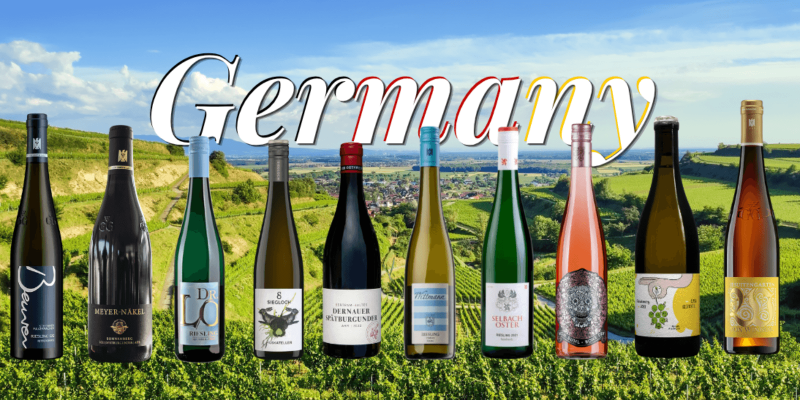
German wine today extends well beyond its traditional Riesling identity, offering a broader, site-driven range spanning Riesling, Pinot Noir, sparkling wine, rosé, and white Pinot varieties while aligning with modern on-premise needs.
With an emphasis on balance and food compatibility, these wines are increasingly appearing on restaurant wine lists that value freshness, versatility, and adaptability across cuisines.
This evolution is reflected through Germany’s key regions and the producers shaping them.
Located in a narrow river valley in western Germany, the Ahr is one of the country's
northernmost and smallest wine regions, with vineyards stretching roughly 15 miles along the Ahr River. It is defined by Spätburgunder (the German word for Pinot Noir) grown on steep slopes of slate, basalt, and volcanic rock, producing wines that are structured and finely detailed.
For a country often associated with white wine, Germany’s red wine story is increasingly important: roughly 34% of its vineyard area is planted to red varieties.
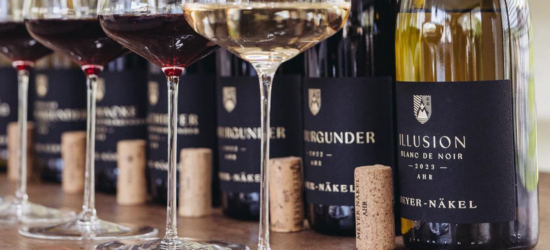
Source: Weingut Meyer Näkel
A benchmark producer for German Pinot Noir, Meyer-Näkel combines generational experience with a focused, site-driven approach. The wines are structured, polished, and consistently expressive, balancing bright red fruit, freshness, and mineral structure.
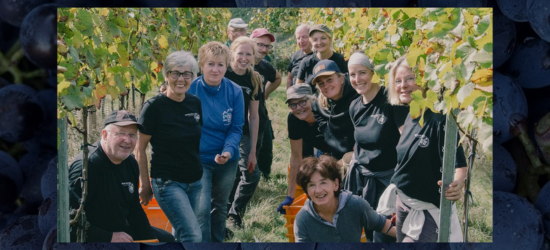
Source: Weingut Bertram-Baltes
A newer name in the region, Bertram-Baltes works with a minimal intervention approach and careful vineyard management. The wines show clarity, freshness, and a transparent expression of the Ahr’s steep slate vineyards.
The Mosel is one of the world’s defining regions for Riesling and Germany’s oldest wine-growing region. Steep vineyards, reaching nearly 70-degree gradients, and slate soils shape wines that are aromatic, mineral-driven, and built on vibrant acidity.
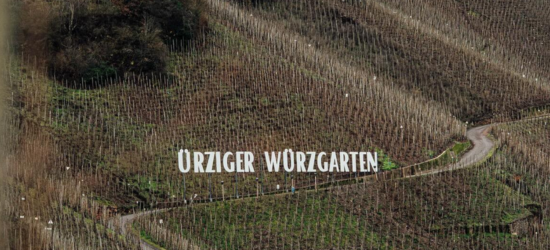
Source: Dr. Loosen
Ernst Loosen is one of the defining figures of Mosel Riesling. Working with old, ungrafted vines, some over 120 years old, preserved thanks in part to the region’s steep slate slopes and vineyard conditions that historically limited phylloxera, the estate produces wines that are precise, age-worthy, and clearly rooted in terroir.
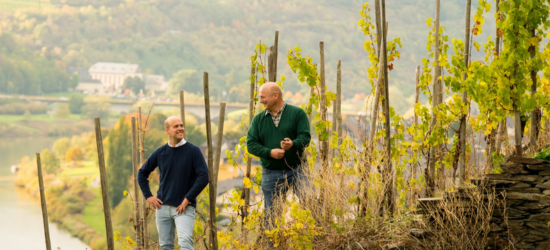
Source: Weingut Selbach-Oster
Based in Zeltingen, Selbach-Oster focuses on clarity and balance. The wines are restrained in alcohol yet layered in complexity, with a strong sense of precision and an intensely mineral character drawn from their Devonian slate sites.
One of Germany’s warmest and sunniest wine regions, the Pfalz benefits from the moderating influence of the Palatinate Forest, allowing grapes to achieve fuller ripeness across a broad stylistic range while also making it Germany’s largest red wine-producing region.
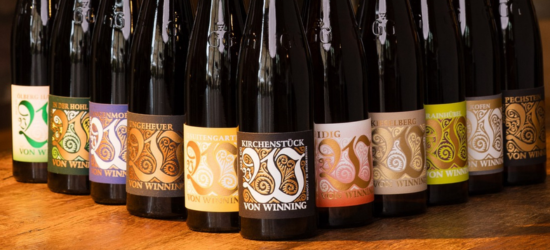
Source: Weingut von Winning
Based in Deidesheim, von Winning produces dry Rieslings defined by structure, minerality, and a distinctive approach that draws on both Grosses Gewächs vineyard sites and meticulous cellar work. The wines are precise, consistent, and distinctly modern in style.
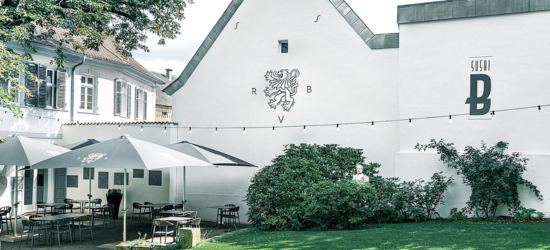
Source: Reichsrat von Buhl
A historic estate dating back to the 19th century, Reichsrat von Buhl combines tradition with a contemporary approach. The portfolio spans still and sparkling wines with a certified-organic, structured style rooted in Deidesheim and Forst's best sites.
Germany’s largest wine region, Rheinhessen, has shifted from volume production to quality-focused winemaking. It is now one of the country’s most progressive regions, with producers exploring a broad range of varieties and styles beyond Riesling alone.
Defined by rolling hills, limestone-rich soils, and one of Germany’s warmest and driest climates, the Rheinhessen combines agricultural scale with increasing attention to site-driven wines.
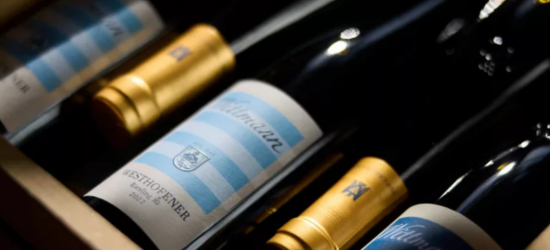
Source: Weingut Wittmann
Philipp Wittmann is known for his commitment to organic and biodynamic viticulture, certified organic since 1990 and biodynamic since 2004. His wines from Westhofen are structured, energetic, and clearly site-expressive, drawing on limestone-rich Grosses Gewächs vineyards, including Morstein, Kirchspiel, Aulerde, and Brunnenhäuschen.
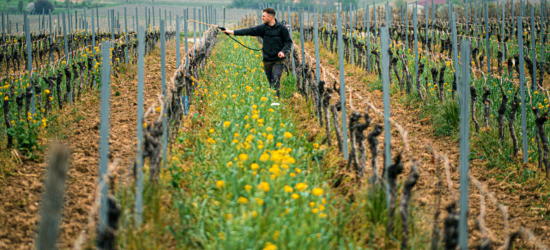
Source: Moritz Kissinger
Part of a younger generation of producers, Moritz Kissinger works with low-intervention methods while maintaining clarity and balance. The wines reflect a younger generation’s focus on biodynamic farming, precision, and transparent site expression.
Württemberg remains less visible internationally, largely because strong domestic consumption absorbs most of its production. The region is known for red varieties, including Trollinger, Lemberger (known as Blaufränkisch), and Spätburgunder, with growing attention on quality and site expression.
Warm, dry summers, river-moderated temperatures, and varied soils support wines ranging from light, fruit-forward styles to deeper, more structured expressions.

Source: Weingut Siegloch
A family-run estate with longstanding roots, Siegloch produces wines that emphasize freshness, bright fruit, and the approachable style long associated with Württemberg reds.
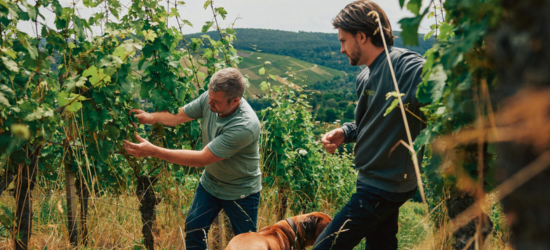
Source: Weingut Beurer
Jochen Beurer works with biodynamic farming and natural winemaking, with a particular focus on Riesling alongside the region's signature red varieties. His wines offer a more textural, low-intervention interpretation of Württemberg terroir and have inspired a generation of producers across the region.
German wines align closely with current on-premise needs, offering moderate alcohol, bright acidity, and strong food compatibility, especially across seafood, spice-driven cuisine, lighter proteins, and tasting menu formats.
For sommeliers and beverage directors, this translates into versatility across cuisines, adaptability within pairing menus, and value across multiple price points.
These aren't niche wines for specialists. They're list-ready wines, the kind that work hard at the table and reward the guest who lingers over a second glass.
At the Sommeliers Choice Awards, wines are evaluated with a clear focus on on-premise performance, including drinkability, food-pairing potential, and value.
This framework reinforces Germany’s growing relevance across modern on-premise wine programs and evolving consumer preferences. What was once a category defined by a single grape in a single style is now recognized as one of the most diverse and food-friendly offerings available to buyers today.
Explore award-winning wines from the Sommeliers Choice Awards, recognized for their performance in on-premise wine programs.
The 2026 winners were announced on June 10, 2026.
Also Read:
The Impact of Global Events on Wine Trends and Prices
Tasting Notes Decoded: Understanding Judges' Comments on Top Wines
The Current State of the US Wine Industry