Educating Sommeliers Worldwide.
By Beverage Trade Network
Sustainability has shifted from a niche interest to a mainstream buying driver. Across the U.S., more consumers are questioning how their favorite wines are grown, bottled, and brought to market. They want to understand how wineries treat their land, how transparent they are about farming practices, and whether their environmental commitments are real or simply marketing spin.
This shift is reshaping portfolios for distributors, retailers, and on-premise buyers—driving demand for wines that are responsibly crafted, organically grown, and rooted in long-term stewardship. As this segment grows, wineries with genuine sustainability philosophies are emerging as key partners in helping businesses capture the modern, eco-conscious consumer.
Today’s wine buyers are more informed and more intentional. They look for brands that reflect their values: environmental responsibility, ethical sourcing, and a clean, transparent supply chain. They gravitate toward organic wines not only because they avoid synthetic pesticides and herbicides, but because they represent healthier ecosystems, healthier soils, and ultimately cleaner bottles.
This is particularly true among younger demographics, whose purchasing power is increasingly shaping the U.S. wine market. For them, authenticity matters. Storytelling matters. Proof of sustainable practices matters. And wineries that can demonstrate real environmental commitments will naturally resonate with this growing audience.
Over the last decade, the U.S. has seen steady growth in organic and sustainably made wine consumption. The trend ties into broader lifestyle choices—consumers are eating cleaner, paying attention to agricultural practices, and embracing a more holistic understanding of “quality.”
For wineries, this shift is an opportunity. Those investing in soil regeneration, water conservation, low-input farming, and organic certifications are strategically positioned to stand out in a saturated market. Their wines don’t just appeal to the palate—they appeal to a mindset.
Many wineries talk about sustainability. Fewer live it with generational depth. In Washington State’s Columbia Valley, some producers have been quietly building eco-conscious practices long before sustainability became a buzzword.
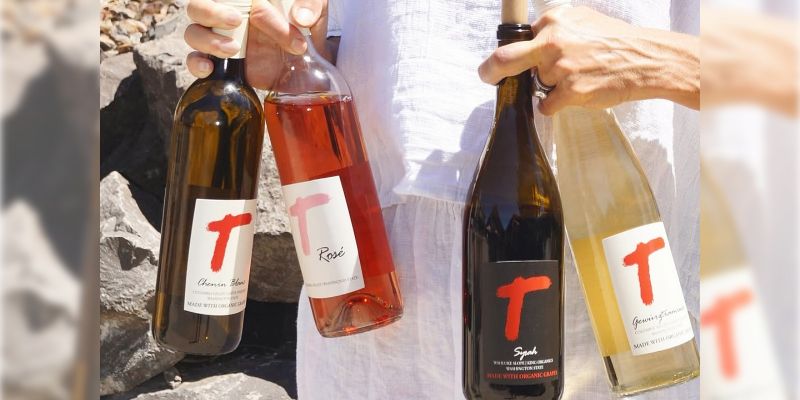
Operating across more than 2,000 acres spanning influential AVAs like Arete, Alice, Kennedy, Michael, and Walker, Tagaris Winery is among the producers whose approach aligns naturally with today’s demand. Several vineyard blocks—especially within the Alice Vineyard—hold WSDA Organic Certification, reflecting years of soil-focused, low-impact farming.
The latitude across these vineyards mirrors Bordeaux’s 46°N, offering ideal growing conditions for a diverse range of varietals—from Riesling, Sémillon, and Gewürztraminer to Cabernet Sauvignon, Petit Verdot, Barbera, and Syrah. By managing every step “from dirt to bottle,” Tagaris mirrors the type of transparent production chain consumers increasingly expect.
What stands out is not the acreage or even the certification. It is the ethos. For the Taggares family, environmental responsibility is cultural, not commercial. They describe sustainability as a way of being “good stewards of the land and good neighbors,” embedding it into farming decisions, winery operations, and long-term planning. This type of authenticity is exactly what eco-conscious consumers (and the businesses that serve them) gravitate toward.
For distributors and retailers aiming to grow their eco-friendly wine segment, the playbook increasingly focuses on storytelling, education, and alignment with consumer values.
Narratives Behind Sustainable Wines
Consumers love understanding the “why” behind a wine—how it’s grown, who farms the land, and what environmental choices the winery makes. Sharing these stories through digital campaigns, staff training, POS materials, and in-store tastings helps bring sustainability to life.
Digital Momentum & Community Building
Social media engagement, email storytelling, and behind-the-scenes winery content are powerful tools for eco-conscious audiences. User-generated content—customers sharing their experiences with organic bottles—adds authenticity that no ad can replicate.
Partnerships That Align With Values
Farm-to-table restaurants, eco-focused retailers, wellness-driven communities, and lifestyle brands offer synergistic partnership opportunities. Co-branding tastings or events centered around sustainability send strong signals to conscious consumers.
Consumer demand today leans toward expressive, fruit-driven wines that are produced responsibly and transparently. This has opened an ideal lane for wines crafted with minimal intervention and a focus on vineyard expression.
In recent years, Tagaris’ portfolio has earned notable acclaim for delivering exactly that balance of sustainability and high-quality winemaking:
Other award-winning wines from the Tagaris Portfolio include:
These wines not only showcase the diversity of Washington terroir but also fit neatly into the purchasing logic of eco-conscious consumers: vineyard-driven, transparent, sustainably farmed, and consistently high-quality.
Many buyers still don’t fully understand what “organic,” “sustainable,” or “low-impact” farming truly means. Wineries committed to these practices often become partners in education—through vineyard tours, staff tastings, training sessions, and detailed product knowledge.
This type of support helps distributors and retailers confidently communicate value to their customers, making sustainability not just a concept but a clear selling advantage.
While sustainability drives modern demand, heritage still adds depth. Three generations of the Taggares family have farmed the Columbia Valley, and their Greek winemaking lineage dates back centuries. Their Taverna on Tulip Lane—built into the winery—remains a tribute to their belief that “wine, food, conversation, and community” are inseparable.
For many eco-conscious consumers, this blend of cultural authenticity and agricultural responsibility strengthens the appeal.
Brands rooted in long-term stewardship—like Tagaris—fit naturally into this shift. Their organic-certified blocks, vineyard diversity, generational story, award-winning wines, and comprehensive distributor support create a compelling fit for businesses looking to expand their eco-conscious offerings.
In a market where authenticity matters more than ever, wineries that treat sustainability as a philosophy—not a pitch—hold the strongest potential to connect with the next generation of wine drinkers.
Header image sourced from Tagaris Winery (Instagram).